This week I wanted to let you know about an upcoming podcast interview on Rendezvous With a Writer that will take place this Thursday evening. I met Bobbi Jean and Jim Bell a few years ago when I was interviewed on The Writers Block, part of LA Talk RadioRendezvous With A Writer | LA Talk Radio. Jim Christina, the host, made me feel so welcome and invited me back. So I took him up on his offer. Since Jim’s passing, Bobbi Jean and Jim have taken over the online radio show/podcast that is now also available on video https://www.facebook.com/WritersOutWest/
Now, I love coming back and talking with the hosts and sometimes bringing someone with me. This Thursday, I will be guest hosting on the podcast with the Rev. Dr. John Toles, Amazon.com: John F Toles: books, biography, latest update author of The Father Savel mysteries. John has some wonderful characters in his books and I love interacting with them. His mysteries keep you guessing until the end. He is a member of my writing club and I have enjoyed his friendship as well as his writing.
Be sure to join us on Rendezvous With a Writer Thursday night at 8:00 CST. You can listen in on the LA Talk Radio site or watch us on Facebook at the link above. We’d love to have you join us. John and his characters are a lot of fun, and so are Bobbi Jean and Jim.
Last week we talked about clues in mystery writing. This week we will talk about evidence. It is the facts or information indicating whether a belief is true or valid. We think we know who the murderer is, but how did we come to that conclusion.
Evidence
Evidence and logic go hand in hand. These are the facts or pieces of information that can prove a proposition. In the world of crime, evidence comprises facts and physical details that can be used in court. Evidence can be examined, hearsay can’t.
In the realm of the mystery writer, evidence is part of the physical clues the detective can use to determine the killer.
In the modern world of forensic science, evidence can be scientific and very detailed. Before using physical evidence as clues, you’ll need to do research to understand how evidence is observed, collected, and used.
If you use evidence as clues in your mystery, be sure to get the science details right. You will lose readers if you guess.
Evidence in mystery movies or novels can include:
Discovery and elimination of suspects (in which creating false suspects is often part of the killer’s plan)
Evaluation of clues (sifting the true from the untrue)
Identification and apprehension of the killer.
Physical clues: objects or material traces, usually found at the crime scene or among the suspects’ possessions.
Biological clues: organic traces left behind.
Sherlock Holmes never met a piece of evidence he didn’t love. He placed them in order and examined them carefully. Your reader will do the same. Many readers of mystery read them to try to outwit the detective. “I knew it was him!” So don’t disappoint them.
Evidence gives us something to prove that the belief is true. Examine your evidence and be sure not to disappoint your readership.
I write mysteries and suspense novels. And I’ve spoken on the idea of how to structure them. I thought we might talk about structuring mysteries/suspense novels on this blog over the next few weeks. I did a little research and found a few things that I thought were helpful. To draft a good story, you must surprise and keep your readership. Mystery/suspense is the perfect place.
Here are some ideas for structuring your story:
Keep your reader guessing:
When you write a mystery, you set up a trail for the detective to follow until they discover the killer. The process is similar no matter what sub-genre you write—traditional mystery, cozy, crime, police procedural, private investigator, etc. That trail leads your readers into the mystery and keeps them turning pages.
Along the trail, your detective protagonist discovers clues that eventually lead him, and the reader, to the perpetrator. As a writer, your job is to plant these clues successfully.
Clues
In order to do so, it’s important to understand the difference between clues, evidence, and red herrings. Today we’ll talk about clues. You’ll be tucking these items in among the scenes in your storyline. Sometimes you want them to be evident to the detective and other times you want to hide them from your protagonist. Understanding what they are and how they work helps you construct a tight story that keeps readers guessing.
In a mystery story, a clue is anything that points the detective to the killer.
Clue is a variant of the Late Middle English clew, a ball of thread. If you remember your Greek mythology, such things can be very handy when guiding people out of labyrinths – much as a detective unravels a mystery to solve a crime.
As a writer constructing your story, you have endless possibilities to plant and hide clues along your storyline. As you outline your plot, brainstorm ideas for what clues will lead your detective toward solving the puzzle.
Here are some ideas to get you started:
Physical items the victim left behind – letters, notes, notebooks, a keepsake, tickets, ticket stubs, emails, text messages, etc.
Dialogue with suspects – voicemail recordings, conversations with the detective, overheard conversations, dialogue with the detective’s opponent or love interest. Even hearsay and gossip can hide grains of truth that are clues.
Background – cultural paradigms in the victim’s world that make sense within that world. When a victim is part of a specialized world, your detective may need to know about the world in order for pieces to make sense. It could be anything from the gambling underworld to flower shows, or dog breeding, or deep-water diving, or spiritual cults, or… you get the idea.
Clues are anything the detective learns that point him toward resolving the mystery.
In the next few weeks, we’ll talk about evidence and red herrings, how to use them and where to place them in your story to keep your readership turning the page.
Join me next week for evidence. What are you reading/writing this week?
I normally use an appliance until I’ve wrung the very last drop of energy out of it. A classic example is the wall oven that was in my house when I moved in 27 years ago. It is large, self-cleaning, and has served me well. However, in the last couple of years it hasn’t been reliable. The chicken strips didn’t get done in the time the package said, the cake fell in the middle and was burned around the edges even though I cooked it longer at a lower temperature than called for, the pies I made for the holidays were runny in the middle, etc. My final failure was the cornbread that was gooey in the middle and burned on top even though I adjusted the temperature and time. The poor thing is tired and I don’t know how old it is. But it has dials instead of being digital if that helps you understand. The self-cleaning feature seems to work when it feels like it, too.
Then there is the dishwasher. I am tired of washing my dishes by hand, putting them in the dishwasher, and then washing them again when they come out. Especially the silverware. I’ve cleaned it multiple times and it helped for a while, but it still doesn’t get the dishes as clean as I’d like. It has push buttons on the outside that are cracked and the white plastic door has become yellow. While not as old as the oven, only 20 years old, it has been a workhorse and now it is tired.
I went to the local big box store and looked at so many ovens and dishwashers, my head swam. I went home and did the same online reading reviews of brands and models. Then I went to the local mom and pop appliance store. They had a lot of the same things. They told me they were in a buying group and normally there would be sales around the 4th of July. So I went home to my limping appliances and tried to make them work.
This week, I ordered a new dishwasher and wall oven at the same time! They will arrive in about a week. I ran back and forth several times to the store and had the installation guy come to the house to be sure the wall oven would fit. Finally, I ordered them both after settling on the best buy for the money. I am looking forward to the installation. It might be 2 weeks before this is done, but I cook and clean daily and need my appliances. These two will probably outlive me. That’s fine. The kids can sell them with the house when I’m gone.
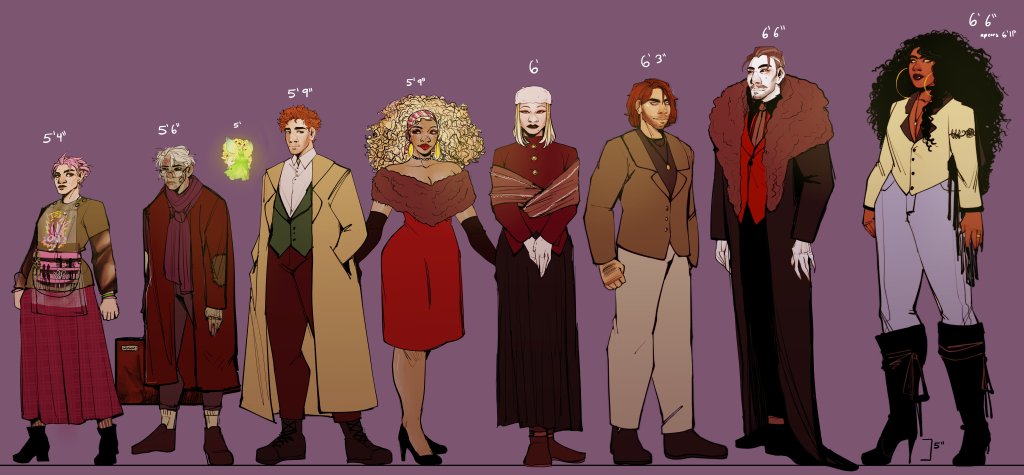
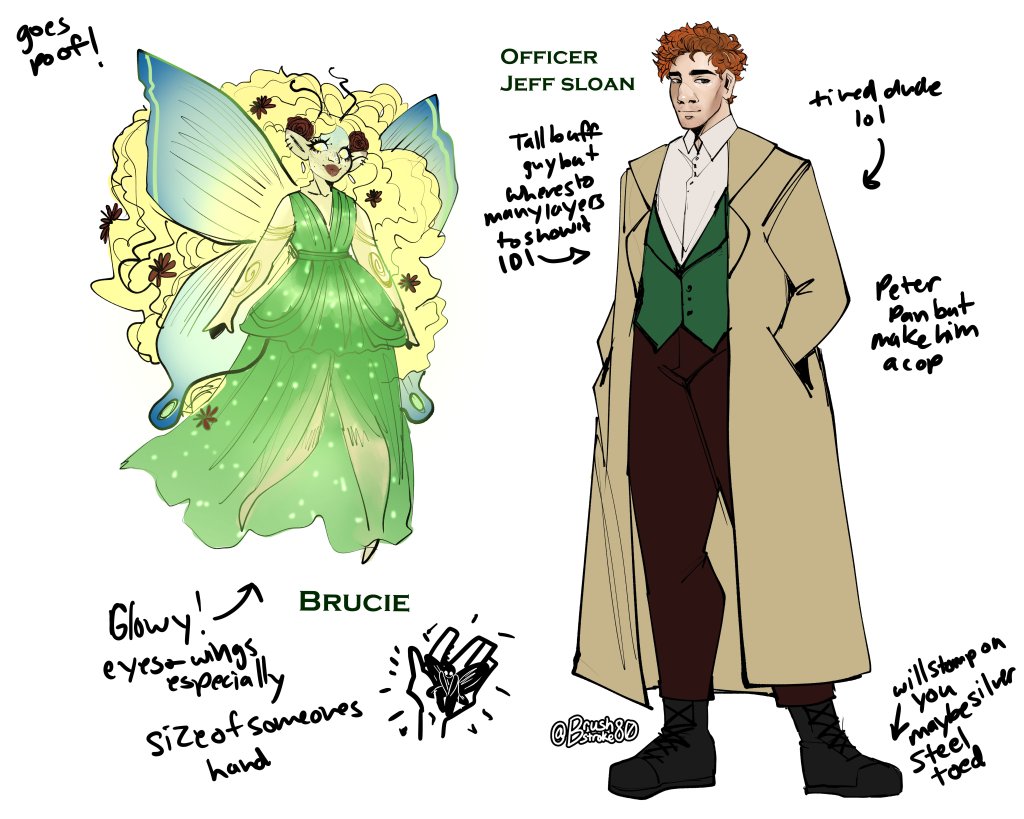
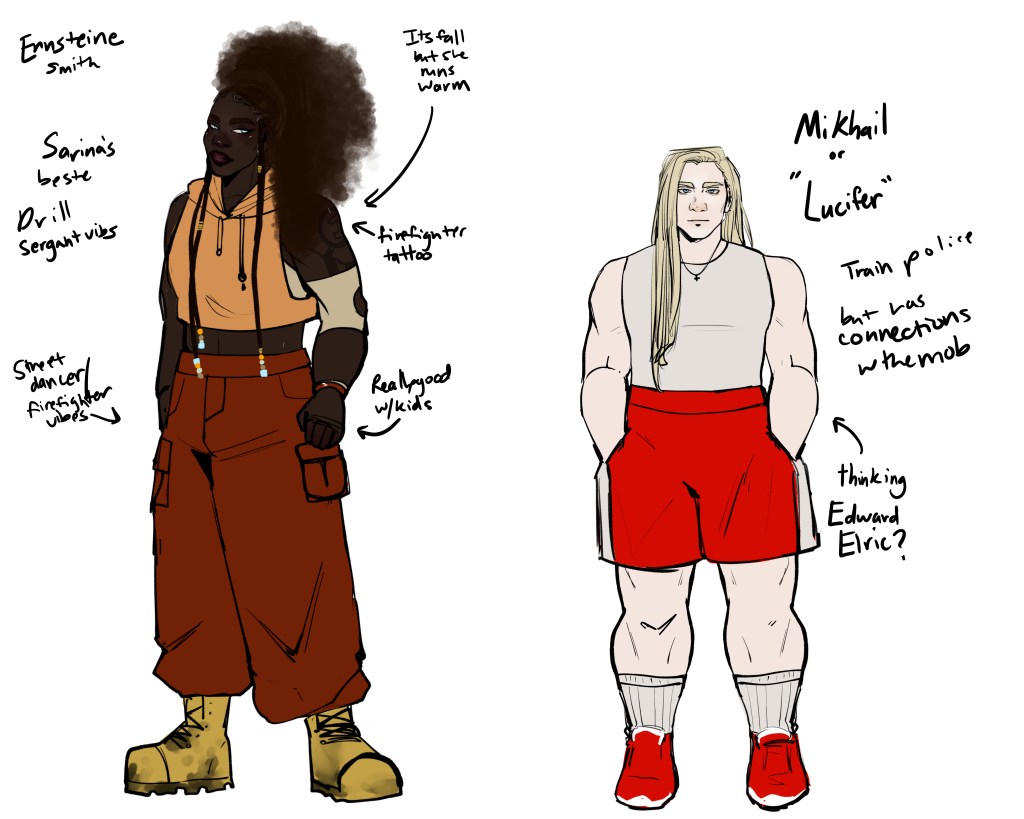
I’ve been in touch with Gabriella Saenz this week about the artwork for our upcoming graphic novel, Flatiron Death Grip. This woman is SO talented! I am always amazed at her work. She has finished sketching all the characters and will begin working on the panels for the graphic novel. In the meantime, you can pick up a copy of the original novel, with her illustrations on the inside, from Amazon at Flatiron Death Grip: Chambers, Peggy, Saenz, Gabriella: 9781953589101: Amazon.com: Books where it is currently on sale for $6.10 in paperback.
I wanted to show you some of her sketches. She is such a perfectionist. I emailed her a copy of the novel, the graphic novel script, the 4 short stories that originally created the main characters, characterizations, etc. I probably overwhelmed her. But since I didn’t know what I was doing with an artist, I went for overkill. This was originally her idea to make this a graphic novel and I was blown away with the offer.
At a craft show lately I ran into a woman who picked up the novel, Flatiron Death Grip, and opened it. “Oh, I hoped it was a graphic novel,” she said. And I said, “Soon!” So, Gabs was right. It needed to be a graphic novel.
I’ll keep you informed as to progress. But here are a few more sketches.
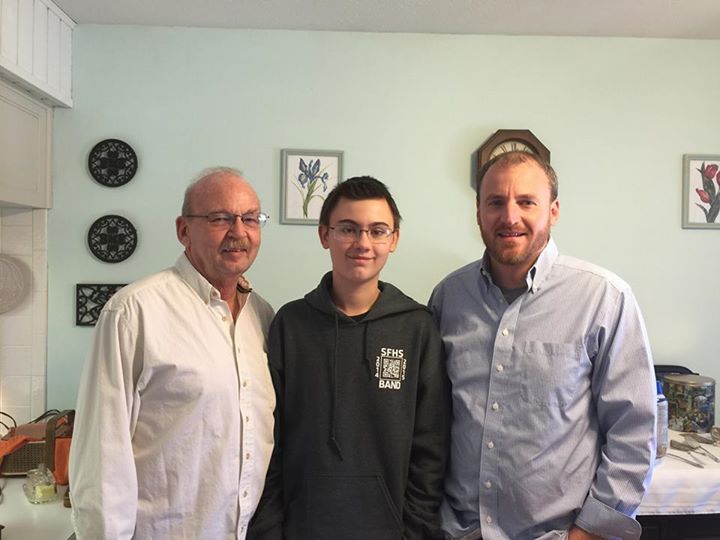
It’s Father’s Day and I wanted to pay tribute to all the fathers that have been in my life.
I barely remember my paternal grandfather because he died when I was young though he outlived two wives. We called him Papa and he told me there were bugs in my oatmeal at breakfast. He was just teasing, but I refused to eat breakfast that day. He was a farmer and raised five children during The Great Depression. My father was the youngest.
My maternal grandfather was also a farmer and big hunter and fisherman with a deep baritone voice that could be heard all over the tiny church where he attended. He also raised a family during The Great Depression and here were eight of them, my mother one of the oldest.
I come from a long line of farmers as my father-in-law farmed for a while and then moved to town. They only had two children, and neither of them got into farming. Both went to college.
My father also stayed away from farming and went into the Air Force during WWII and became an aircraft mechanic. He spent his life raising three children and fishing as often as possible.
My husband and his brother both went into radio and raised two children each. Later my husband changed professions and worked in Aircraft Maintenance to take care of his family and hunted when he could. He loved the great outdoors but didn’t work in that field.
My husband and I raised two children, and our son became an immediate father to two children when he married their mother. He is an avid fisherman, and motorcyle enthusiast, but spends his days in front of a computer, though he, too, loves the outdoors.
All of these men worked hard all their lives, raised their children, and played when they were given a chance—if they weren’t too tired after the day’s work. Men like them are what make the world go ‘round. They work hard, play hard, and enjoy their families.
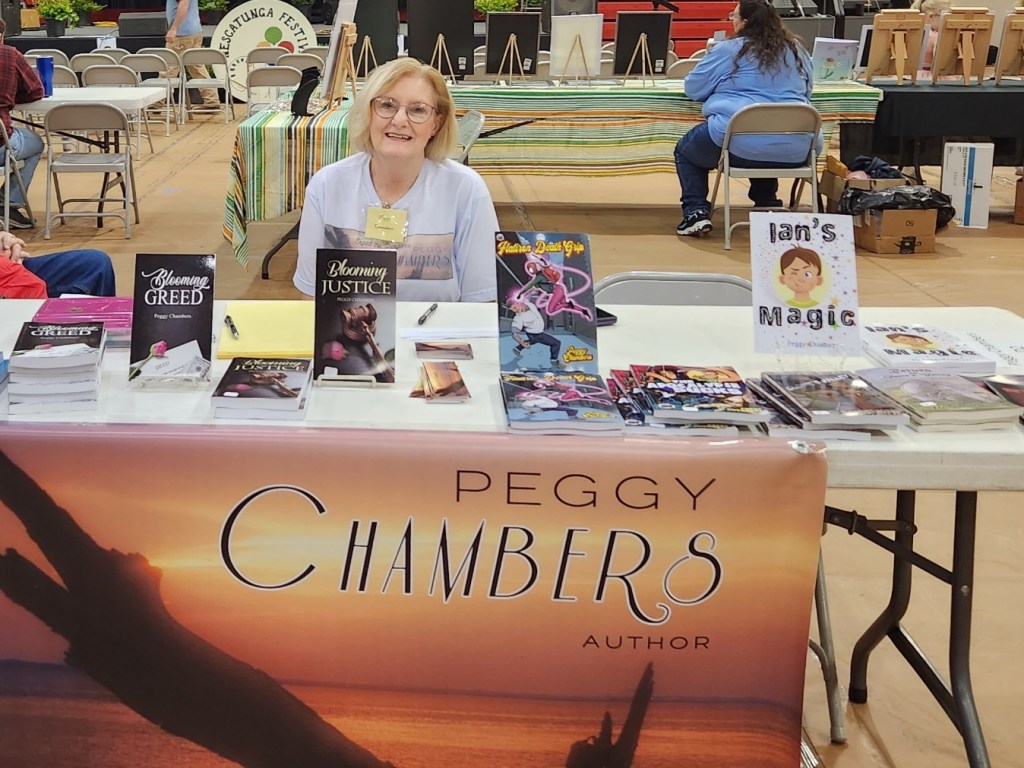
Yesterday I attended the 52nd Annual Nescatunga Arts Festival Arts Festival | Nescatunga Arts Festival | United States | Alva, Oklahoma in Alva, Oklahoma, home of Northwestern Oklahoma State University. The Nescatunga Arts Council had the festivities set up in the Percefull Field House on the NWOSU campus. There was a sugar show, as well as authors, artists, musicians, and crafters from all over the state and Kansas/Missouri. This year it was a three-day event, Friday, Saturday, and Sunday. There were activities both inside and outside and food trucks kept everyone fed.
Alva has a large art community in northwest Oklahoma. I’ve attended this before and consequently become involved in the Graceful Arts Studio Graceful Arts Center | Alva, OK | Gallery and Studio on the downtown Alva square where they not only teach art but promote artists of all kinds. I have books for sale on the shelves there.
Judges were set up to award prizes for the artisans’ booths. It was a fun day and there were many things to see and do. Musicians were on the stage continually and face painters kept the kids entertained.
You can still attend this afternoon and if you miss it, there is always next year. The Nescatunga Arts Festival has been around for 52 years and will be there again next year celebrating the arts in the community and surrounding areas.
I posted on Facebook this week that our backyard had become a robin maternity ward. And my little beagle dog was no longer allowed in her own backyard. That was her yard (and her bathroom) and she wasn’t allowed to go there anymore. The robins said so.
I don’t know how long it takes to make a nest, lay eggs, hatch them, feed the hungry little critters, and teach them to fly but I think we’ve been dealing with the robin nest for about a month. There are two flood lights on the back porch by the dining room window and we didn’t pay close attention to the robin who built the nest there. We will next time. Soon we saw the mother sitting on the nest and then later we watched her feed them.
A few days ago I heard a ruckus and ran to the door to see my husband dragging the dog inside. There was a baby robin in the grass outback. Evidently the dog did no damage and the little guy hopped and cheeped all over the backyard finally landing in the mostly dead bush by the fence.
Today my husband announced he HAD to mow the grass. He put on a hat expecting to be bombarded by adult robins. I took the dog for her second walk of the day. She can’t do everything she needs to do in the front yard with the neighbors watching. That is reserved for the backyard or a neighbor’s yard as we walk. She is certain someone will clean up after her no matter where it lands.
The mowing went smoothly. The robin parents seem unconcerned now. And in just a short time there are no longer four little heads poking out of the nest, but only two! My kids didn’t leave home that quickly. The robin parents may be somewhere resting. The last babies are on their own, not fed as often. I don’t know if it will fly soon, but my dog wishes it would. We’re hoping this fiasco is over this week and my little dog can have her backyard to herself.
We will be cleaning out a nest shortly and keeping a closer eye on other potential nests in the future.
When I was young, when I got tired of a room, I’d run to the hardware store, buy a bucket of paint, change the color of the room, and move the furniture around. I’d peruse the Sears or Penney’s catalogue for new curtains and presto/chango, new room. None of that is possible anymore.
I’ve been wanting to paint my kitchen. I’ve been in this house for 27 years and I’ve re-wallpapered the kitchen once, painted the walls and cabinets once, and it is time once again. It’s the main room of the house next to the living room. But I’m not as young as I once was. I’m hiring it done this time.
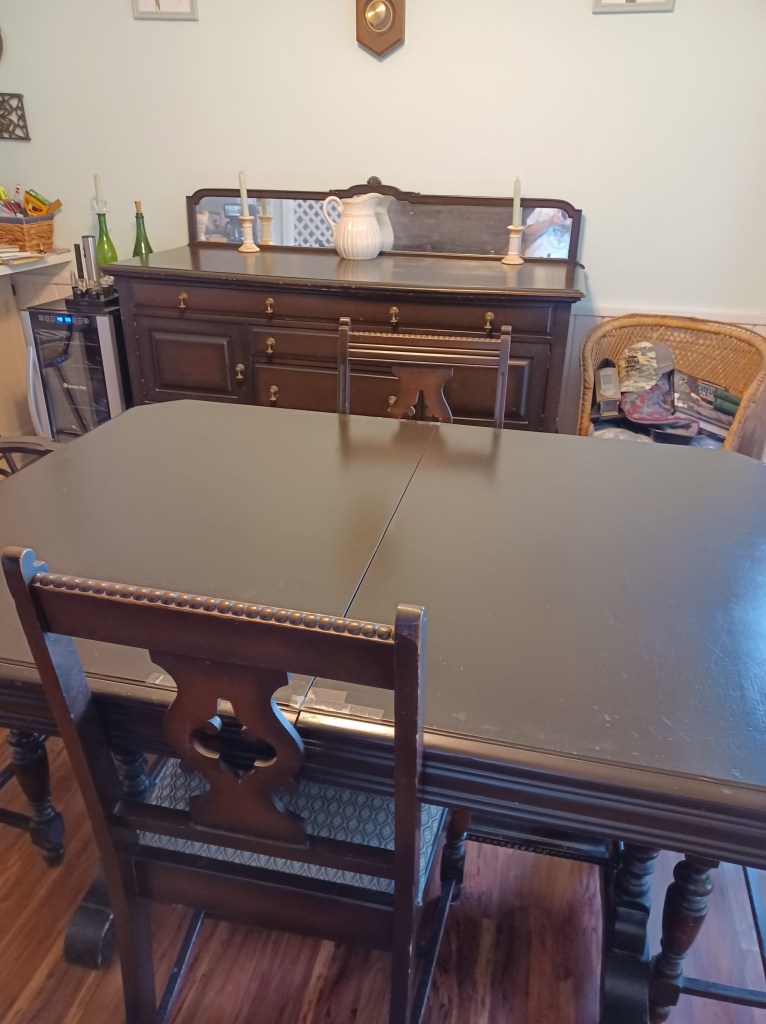
Before my husband and I were married, we visited a used furniture store and spent $75 on the table and chairs in the picture. My mom came up with the buffet later. A friend refinished them. We raised our kids on them and we are about to have our 51st anniversary. They’ve been around awhile. They’ve been in the kitchen and dining room. I’ve worn out countless tablecloths trying to keep the table in good condition and I’m so tired of tablecloths.
I thought about painting the dining set. Just the tops and then putting a glaze over the paint so it was waterproof and I wouldn’t have to keep the tablecloth clean. I know my husband would have hated it. Instead, I took pictures of them and put them through Google Lens to see what they were worth. I found they are 100 years old. They were made in the early 1900s. 100 years! A century! That deserves respect. That deserves a new tablecloth and some furniture polish.
Okay, I won’t paint them. But I will hire someone to get rid of my florescent lights in the kitchen and paint the walls a new color. I’ll move some art around (I have plenty), buy some new curtains, and change things up a little.
Change is good. But a century old piece of furniture that has been well loved and well used—that is a treasure.
Life is a patchwork of moments — laughter, solitude, everyday joys, and quiet aches. Through scribbled stories, I explore travels both far and inward, from sunrise over unfamiliar streets to the comfort of home. This is life as I see it, captured in ink and memory. Stick around; let's wander together.

























 Peggy Chambers "Views from the Hammock" site